
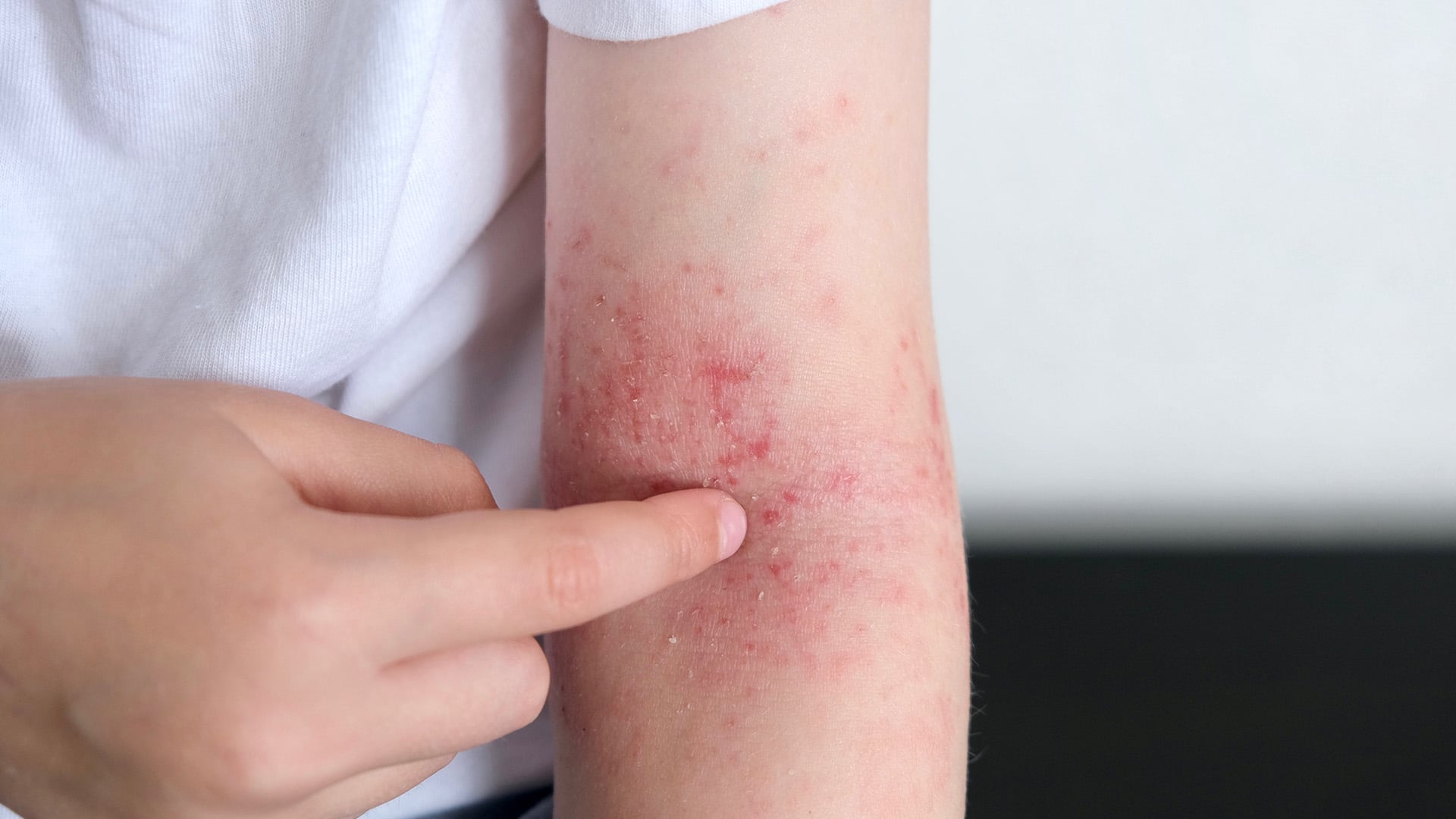
Red, itchy skin that won’t settle down can be frustrating, especially if you’re not sure what caused it.
Contact dermatitis is one of the most common causes of rash. It can show up suddenly, linger longer than expected, and keep coming back if the trigger remains unidentified.
The good news is that once you understand what is behind it, this condition is often very manageable.
In this guide, you’ll learn what contact dermatitis is, what causes it, how to recognize the symptoms, and what treatment options are available.
In This Article
What Is Contact Dermatitis?
Contact dermatitis is a type of skin inflammation that occurs when the skin reacts to a substance it has come into contact with.
This reaction can happen in two main ways:
- Direct irritation to the skin
- An allergic response triggered by the immune system
It is a form of eczema, but unlike other types, it has a clear external trigger.
In fact, contact dermatitis is very common and can affect people of all ages.[1]
Types of Contact Dermatitis
Irritant Contact Dermatitis
Irritant Contact Dermatitis is the most common form.
It occurs when a substance damages the skin’s outer layer. Repeated exposure can weaken the skin barrier over time.[2]
Common irritants include:
- Soaps and detergents
- Cleaning products
- Solvents and chemicals
Allergic Contact Dermatitis
Allergic contact dermatitis involves the immune system.
The skin reacts after becoming sensitized to a substance. Even a small amount can trigger a reaction once sensitivity develops.[3]
Common allergens include:
- Nickel in jewelry
- Fragrances in skincare
- Preservatives in cosmetics
- Plants such as poison ivy
Common Causes of Contact Dermatitis
Many everyday products can trigger contact dermatitis.
Frequent causes include:
- Skincare and cosmetic products
- Hair dyes and shampoos
- Household cleaning products
- Metals such as nickel
- Workplace exposures, such as chemicals or gloves
People in certain professions, such as healthcare or cleaning services, may be at higher risk due to repeated exposure.[4]
Contact Dermatitis Symptoms
Symptoms can vary depending on the cause and severity.
Common signs include:
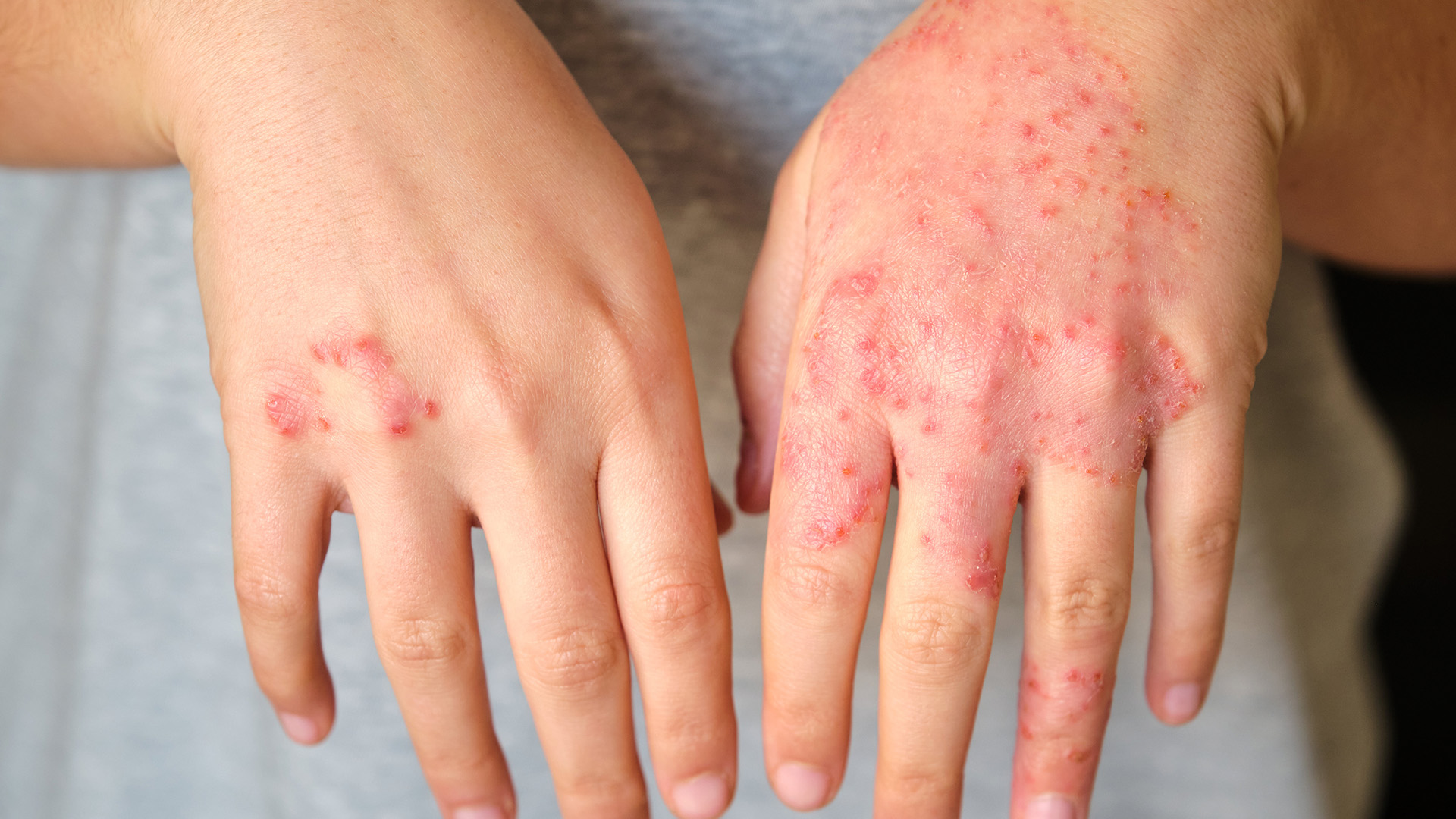
- Red rash or patches
- Itching, which can be intense
- Dry, cracked, or scaly skin
- Blisters or oozing in more severe cases
- Burning or stinging sensation
The rash usually appears where the skin made contact with the trigger.
How Is Contact Dermatitis Diagnosed?
A diagnosis typically starts with a clinical evaluation.
A dermatologist will:
- Review your symptoms
- Ask about recent exposures
- Examine the affected skin
In some cases, patch testing may be recommended. This test helps identify specific allergens causing the reaction.[5]
Contact Dermatitis Treatment Options
At-Home Care
For mild cases, simple steps can help:
- Avoid the suspected trigger
- Use gentle, fragrance-free skincare
- Apply moisturizers regularly
- Use cool compresses to reduce irritation
Medical Treatments
For more persistent or severe cases, medical treatment may be needed.[6]
Options may include:
- Topical medication to reduce inflammation
- Oral medications for widespread reactions
- Prescription-strength creams
- Barrier repair moisturizers
Treatment depends on the severity and cause of the condition.
Prevention Tips
Preventing contact dermatitis often comes down to protecting your skin and avoiding triggers.
Helpful strategies:
- Choose fragrance-free and hypoallergenic products
- Wear gloves when using cleaning products
- Rinse skin thoroughly after exposure to irritants
- Moisturize regularly to support the skin barrier
When to See a Dermatologist
It may be time to seek care if:
- The rash does not improve within a few weeks
- Symptoms are severe or painful
- The cause is unclear
- The condition keeps returning
A dermatologist in Red Deer can help identify triggers and create a personalized treatment plan.
Frequently Asked Questions
Is contact dermatitis contagious?
No. It cannot spread from person to person.
How long does contact dermatitis last?
Mild cases may improve within a few days once the trigger is removed. More severe cases can take several weeks.
Can contact dermatitis become chronic?
Yes. Repeated exposure to triggers can lead to ongoing or recurring symptoms.
What is the difference between allergic and irritant contact dermatitis?
Irritant dermatitis damages the skin directly, while allergic dermatitis involves the immune system.
References
- [1] Contact dermatitis. (2026, March 24). Cleveland Clinic. https://my.clevelandclinic.org/health/diseases/6173-contact-dermatitis
- [2] Skin exposures and effects. (2026, March 4). Skin Exposures and Effects. https://www.cdc.gov/niosh/skin-exposure/about/index.html
- [3] Contact dermatitis – Symptoms and causes. (2024, May 2). Mayo Clinic. https://www.mayoclinic.org/diseases-conditions/contact-dermatitis/symptoms-causes/syc-20352742
- [4] Canadian Dermatology Association. (2025, November 5). ECZEMA – Canadian Dermatology Association. https://dermatology.ca/public-patients/diseases-conditions/skin-conditions/eczema/
- [5] Patch testing can find what’s causing your rash. (2021, March 15). https://www.aad.org/public/diseases/eczema/types/contact-dermatitis/patch-testing-rash
- [6] Contact dermatitis – Diagnosis and treatment – Mayo Clinic. (2024, May 2). https://www.mayoclinic.org/diseases-conditions/contact-dermatitis/diagnosis-treatment/drc-20352748